Tuesday, January 5, 2016

Goals for 2016: more fly fishing and a lot of different species

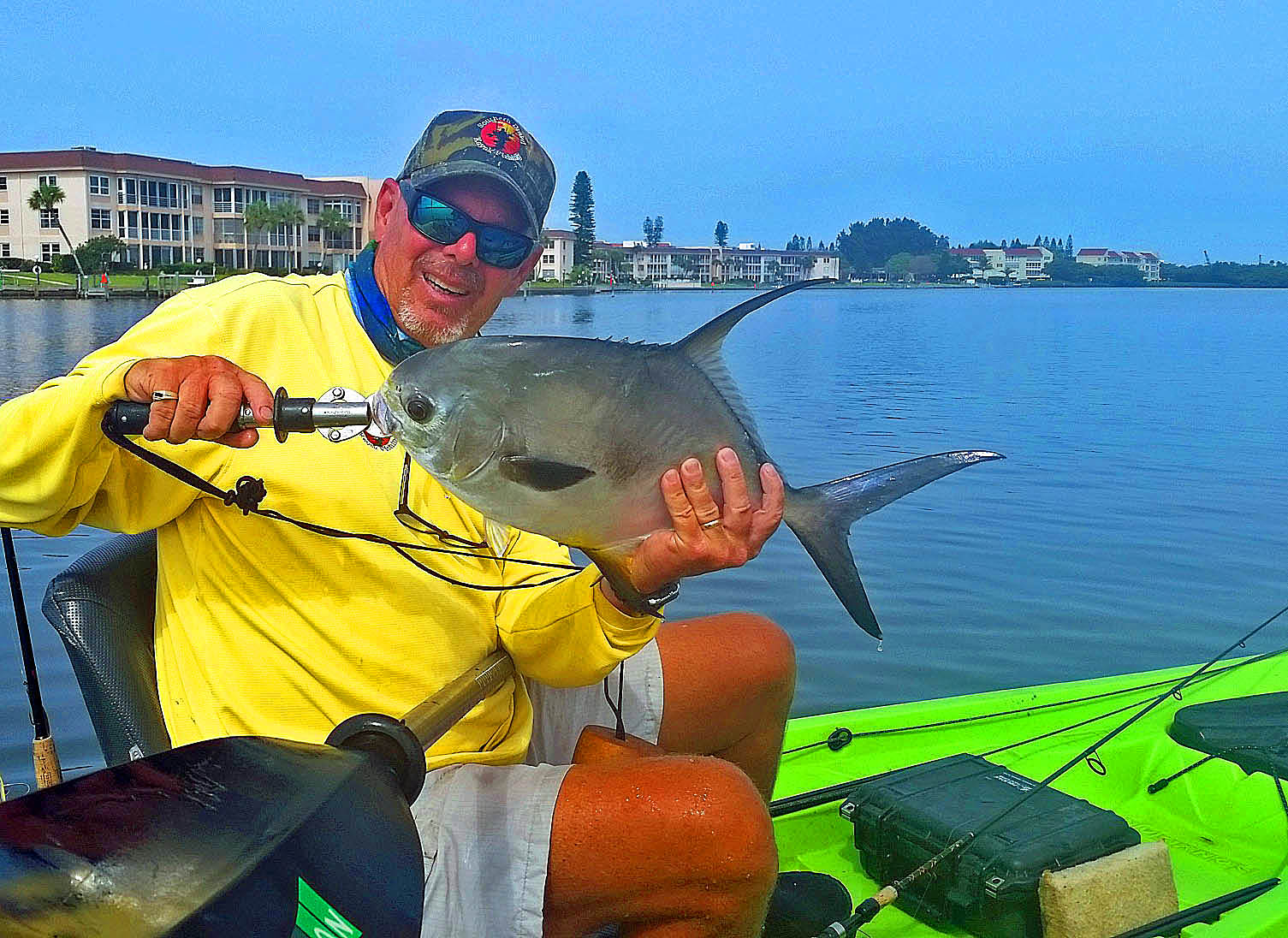
There are permit in Sarasota Bay, and my goal for 2016 is to catch one.
With the new year upon us, it's time to set some realistic  -- and attainable -- goals.

One goal that immediately comes to mind is to do more fly fishing.  I love to fly fish, but don't do it nearly enough. I've made a concerted effort to do more and have done so since last summer. I've only spin-fished on a few occasions.

With that in mind, here are my fishing goals by species:

SALT WATER
Spotted seatrout: 500
Redfish, 50
Snook, 100
Tarpon, 10
Pompano, 20
Flounder, 25
Jack crevalle, 30
Shark, 20
Cobia, 1
Spanish mackerel, 10
Bluefish, 20
Permit, 1
False albacore (little tunny), 1
Tripletail, 1
Kingfish, 1

FRESH WATER
Largemouth bass, 100
Oscar, 150
Mayan cichlid, 50
Bluegill, 500
Shellcracker, 15
Stumpknocker, 30
Channel catfish, 20
Speckled perch, 20
Sunshine bass, 1
Suwannee bass, 1

As I catch different species, I will keep count and remove them from my list as I reach each goal. I think my goals are realistic and not too difficult.

I will write about my progress or lack thereof from time to time through this blog.

All of my fishing will be done via kayak or wading.


Wish me luck!

December was a contrast in fishing, wind and weather

With the advent of colder weather, Myakka River snook should be cooperative.
December was marked by contrast: strong wind and calm, unseasonable warm and sometimes cold, good fishing and not so good.

Fighting a hefty Manatee River channel cat on fly.
Best action took place in Little Sarasota Bay out of the Vamo launch. Fishing there didn't produce quantity, but it did result in quality. First trip of the season there resulted in  five snook to 35 inches, redfish to 27, spotted seatrout to 20, jack crevalle and ladyfish. Most of the fish were taken on MirrOlure Lil Johns on light jig heads, but we also used MirrOlure MirrOdines and Zara Super Spook Jrs.

We fished out of Vamo on several occasions and managed a Slam (snook, trout, redfish) all but two outings.

I also took an ovesized redfish while using a new rig: Pop-N-Fly Rig. It's basically a foam cylinder that is tied between your fly and fly line. It's used much like a popping cork. You use strong strips which makes the cylinder gurgle. That "calls" the fish (it imitates feeding fish or baitfish). When a snook, red, seatrout or other fish hears the commotion and comes up to investigate, it usually will eat your fly.
First fish on Pop-N-Fly, an over-sized redfish.

My first time out with the rig wasn't disappointing. I caught and released a 30-inch redfish that inhaled a synthetic Clouser Deep Minnow.

I was impressed.

Realize that redfish are out most difficult fish on fly rod. They're extremely tough to catch in most situations.

I can't wait to try the Pop-N-Fly in good conditions. You can watch a Pop-N-Fly video at https://www.youtube.com/watch?v=NWocSXszymM


Sid Whitsell, an accomplished fly fisher from Montana, opted to fish Lake Manatee with me on a blustery day. We caught large bluegill on nymphs under strike indicators and popping bugs. Sid did hook one of Lake Manatee's famous large channel catfish, but couldn't keep it out of the vegetation.
Vinny Caruso battles a south Florida big fish.

The next day, Lake Manatee produced great action, but mostly in the afternoon. By noon, we had nine bluegill. When we got back to the boat ramp at 3 p.m., our total included 50 bluegill (mostly large), two channel catfish, two gar and a 4-pound bass. My little No. 12 Snymph (simple nymph) accounted for most of the fish.

Two more Lake Manatee outings resulted in 110 mostly large bluegill.

Back in the salt, Dwight Meade of Siesta Key joined me for an outing out of Vamo. He wanted to learn that area. Dwight picked a good day to learn, because (for whatever reason) the action was slow. We landed two snook and a 19-inch trout. We also lost a sizeable redfish on a Johnson Silver Minnow Spoon.

Vinny Caruso of Bradenton fished the Manatee River on a fairly slow day. We landed seven bluegill and three channel catfish on No. 12 Snymphs.

I fished Roberts Bay on a scouting mission out of Blackburn Point and a very blustery day. I was prepping for scheduled fly-fishing trips. Fishing was very tough because of strong easterly winds, but I still managed six large ladyfish and a couple of decent spotted seatrout.

Because of continued strong wind, Jules Sisk of Ottawa, Ontario and I headed to Venice to fish a tidal creek off the Intracoastal Waterway. We totaled 22 small snook, a jack crevalle, ladyfish and spotted seatrout on baitfish imitations and MirrOlure MirrOdines. Jules not only caught his first snook, but also totaled five.

The spot is very good if you're looking for your first snook.

John Mallia of New York and I headed to Venice to fish that same spot on another windy day. Using MirrOlure MirrOdines, we landed 17 snook, three mangrove snapper and a spotted seatrout.

That spot usually results in mostly small snook, but will give up larger specimens on occasion. We've also taken redfish, flounder and small barracuda.

Mallia and I headed for a lake just east of Naples the following day. I've fished the lake on many occasions this year with decent success. My last trip to the location with Vinny Caruso  (Dec. 16) was slow, but we did manage seven peacock bass and a couple of Mayan cichlid. We also lost three large fish on fly to broken leaders and straightened hooks.

Mallia and I weren't so lucky. John had five or six blowups from decent peacock bass on a topwater plugs, but didn't hook up. He also had a few hits on a D.O.A. Shad Tail on a 1/16-ounce D.O.A. jig, but only managed one decent largemouth bass.

For whatever reason, that particular spot has slowed down tremendously since late summer and early fall.

Caruso and I drove to Alligator Alley which should be prime this time of year. When we arrived at our favorite spot, we were greeted by high and flowing water. That's not supposed to be the case this time of year.

Fishing along Alligator Alley is best during extreme low water. And that's usually the case from mid-December through May. Looks like we'll have to wait a month or so to return.

I'm excited by a new product I ordered from Rexfly (rexfly.com). It's a casting system for fly fishers that I can't wait to try. The Rexfly casting guarantees that you'll cast farther or you get your money back.

I will let you know how it works as soon as I give it a few tries. I'm excited by it. Without going into detail, I will just say the system makes a lot of sense.

JANUARY FORECAST:  Colder weather has shown up, so that will change things dramatically as the fish enter the winter period. Snook should move up creeks and rivers in search of warmer water. I usually fish local tidal rivers this time of year and have done extremely well until that last two years. Redfish and spotted seatrout action should be good on the shallow flats. Pompano, jack crevalle, bluefish and flounder should be on the increase. In fresh water, I anticipate decent action on bluegill, channel catfish and speckled perch. If the water levels drop, I anticipate strong action on oscar, Mayan cichlid, largemouth bass, bluegill and stumpknocker along Alligator Alley.

I offer 4-hour, 6-hour and 8-hour trips in fresh and salt waters. We fish from Tampa Bay to The Everglades. I also offer trips for spinning enthusiasts and fly fishers. I supply all tackle, leaders, flies and lures.

I also supply bottled water on all trips. On all-day trips, I provide lunch.

I recommend anglers wear a long-sleeve shirt, cap or hat and sunglasses. We don't wade on all trips, but you should wear flats boots or wading shoes. If you don't have any, then wear shoes that you don't mind getting wet.

We like to "layer" this time of year. Mornings can range from cold to chilly. But things typically warm up by late morning.

This is our busy time of year. If you're thinking about book a trip, please do so at your earliest convenience.

If you have any
questions, please call me at 941-284-3406 or email me at steve@kayakfishingsarasota.com.


Steve Gibson
Southern Drawl Kayak Fishing
www.kayakfishingsarasota.com
941-284-3406


Friday, December 4, 2015

Eleuthera was beautiful, friendly, but the fishing left much to be desired

A small Bahamian bonefish swims off after being released. The bone hit a Veverka's Mantis Shrimp.


My recent trip to Eleuthera in the Bahamas was actually a birthday present from my wife in 2014.

Kathy knows one of my passions is to fly fish for bonefish. And since there aren't many spots nearby to try, she allowed me to pick where I wanted to go.
Pawpaw Bay was beautiful, but not many fish.

I could have opted for a spartan bonefish camp on a sparsely populated island, but since I wanted her to accompany me I needed to pick a spot that would have some creature comforts for her and at least a few tourist-type things to do.

Last March after I had spoken to the Naples Backcountry Fly Fishers, the club president, Ed Tamson, handed me a copy of Rod Hamilton's Do It Yourself Bonefishing. The book covered most of the known bonefishing spots around the world.

After a quick read, I picked Eleuthera. One of the reasons is Hamilton gave it a seven (on a scale of 10) spousal rating.

That rating turned out to be true.

The fishing wasn't so hot. However, I chalk that up to strong wind (40-to 50 mph) during our stay, a strong high-pressure system and a full moon.

Still, I was able to catch a few bonefish.

High wind made fishing difficult. 
Because of the wind, all of the flats on the east side of the island were not fishable.
So, that limited my choices to the west side.

We stayed at the Sky Beach Club near Governor's Harbour in the central part of the island. I chose to fish spots south of our location.

Day 1 primarily was a scouting mission to determine where I'd spend my time. I visited Tarpum Bay, Winding Bay, Ten Bay, Savannah Sound North, South Palmetto Bay and Pawpaw Bay. The tide was high and I didn't spot any fish.

Because there was a decent tide the next morning, I decided to start at Ten Bay, a beautiful beach located just a few miles south of Governor's Harbour.  I had about 90 minutes to fish before the tide got too high. I didn't see anything for the first hour, but saw four or five tailing fish to the north. By the time I walked to the area, they were gone.

Pawpaw Bay was next. It's beauty far exceeded the fishing.

I found a few tailing bonefish at beautiful Ten Bay Beach.
I stopped at South Palmetto Bay and figured I was at another beautiful but fishless location. How wrong I was. I found a large school (I estimated it at 200 bonefish) two minutes into my visit. My first cast was a little off-target, but my second resulted in a hookup as soon as my fly hit the water. I landed a feisty small Bahamian bonefish.

After a few photos, I revived the fish and released it.

The school was nowhere to be found. The fish had moved off and I never found them again.

The next morning (our final day there), I decided to begin at Ten Bay again. The tide was a little better and figured I'd camp out in the area where I'd seen the tailing bonefish the morning prior.

No luck. Didn't see a single tailer this time.

After 90 minutes, I headed north to South Palmetto Bay. Didn't find any fish at first, but saw a school sitting on a grass patch. I waded to within a cast and hooked up quickly. The fish was a little larger than the day prior, but not much.
The bungalow at the Sky Beach Club at Governor's Harbour.

Veverka's Mantis Shrimp worked again.

I hit Pawpaw Bay on the way back to the bungalow, but didn't see any fish.

I talked with a guide on the island and was told I'd picked a poor time.

"The wind, high pressure and full moon are killing things," he said.

Eleuthera is the birth place of the Bahamas. The island is 100 miles long and little more than a mile wide at its widest point.

I didn't get a chance to fish the south end, but I'm willing to bet that's where some of the best bonefishing takes place. The flats there are a little more remote and probably don't get fished often.

I considered hiring a guide on Sunday (we were there Thursday through Monday), but the conditions made it easy to decide not to. Many of the better spots are on the east side of the island. Casting in 40-50 mph wind wouldn't be fun. And I can't imagine a ride in a flats skiff in that breeze!

I scoped out a large flat in Governor's Harbor that, according to Hamilton, has plenty of fish that have seen every fly known to man. However, I didn't see the first fish. I would have shown them a few flies if I had.

If you want to get away from it all, Eleuthera is the place. Make sure to get your fast-food fix before you arrive. There are no McDonalds, Burger Kings or Wendy's on the island. In fact, restaurants aren't plentiful. What few are there are also very pricey.

We had very good meals at the Rainbow Inn (highly recommended), 1648 and Tippy's.

The Sky Beach Club was perfect. It was located on the side of a hill overlooking the Atlantic Ocean on the island's east side.  Our bungalow was clean, modern and was air conditioned. It featured free WiFi and Direct TV.

Just a stone's throw out of the front door was a beautiful pool overlooking the Atlantic and a hot tub.
On Saturday, we drove north to the Glass Window Bridge where the Atlantic Ocean meets the Bight of Exuma. The color contrast of the two bodies of water is astonishing.

You can tell when you're nearing the bridge on a windy day because your windshield starts getting pelted by saltwater when you're a mile away.  When we visited, the eastern shoreline was being blasted by 15- to 20-foot waves.

It was breathtaking.

We then drove to the south end of the island. However, our trip was cut short by torrential rain.

The Queen's Highway (the island's main artery) was unlined and full of potholes. Driving on the left side of the road was pretty easy during the day, but night driving on the narrow asphalt was nerve-wracking.

We flew in and out of the North Eleuthera International Airport. We would have been better off flying into the Governor's Harbour International Airport. However, we changed our choice of room after we booked out flight. The 50-mile drive to the airport wasn't too bad.

If you're headed to Eleuthera to fish, make sure you have everything you need. There are no fly shops on the island.

For this trip, I took two rods (7 and 8 weight), two reels filled with floating line and a bunch of flies and leaders. I also carried a sling pack with pliers, lens cleaners, tippet, nail knot took, super glue and gloves.

I took an extra pair of polarized sunglasses, but (fortunately) didn't have to use them.

I wore flats boots while wading.

To get around, we rented a 2004 Jeep Grand Cherokee with 196,000 miles on it. It did the job. Gas on the island, however, is quite expensive, going for $4.49 a gallon. Over four days, we spent $120 on gas.

Earlier, I wrote that I picked Eleuthera after reading Hamilton's description. I read where he caught 20 bonefish in about an hour at a spot near a creek. After going back to the book, I realized (too late) that Hamilton didn't reveal the location of the spot. I found that very disappointing since his book was for do-it-yourselfers like myself.

That particular passage was what swayed me. After re-reading, I didn't have the same opinion about Eleuthera. In fact, Hamilton wrote, "Ten years ago the self-guided fishing on Eleuthera was terrific. The great fishing, combined with the beautiful beaches, quality rentals, and the ease of getting around, made it an ideal location for fishermen and non-fishing partners alike. Today, it is still a beautiful place to go, but the fishing has become significantly more difficult."

I'm glad we visited Eleuthera. We had a good time, caught a few fish and enjoyed ourselves. The scenery was awesome, hospitality wonderful and people very friendly. Our trip went off without a hitch.

We spent a few days in Grand Cayman a few years back and experienced better bonefish action. I would have been better off returning to Grand Cayman, not considered a bonefish destination by many.

Next time, I'll try Belize, Mexico or another Bahamian island.


Tuesday, December 1, 2015

November produced good action in fresh and salt water

Dean Gillispie of Fairborn, Ohio battles a feisty Spanish mackerel, one of several fish he caught on the day.
November action started out very good in Sarasota Bay, with snook dominating the picture. Over a four-day period early in the month, we caught more than 50 snook to 27 inches on a variety of lures. Best producer was the mini MirrOlure MirrOdine (http://www.shopmirrolure.com/advanced_search_result.php?keywords=mirrodine&x=0&y=0 ).

A healthy Sarasota Bay pompano taken on a MirrOdine.
Fishing the flats around Buttonwood Harbor, we also caught a variety of fish, including spotted seatrout, redfish, flounder, mangrove snapper, bluefish, Spanish mackerel and pompano. Most of the fish were taken on MirrOdines, but we also caught them on Zara Spooks and MirrOlure Lil Johns on light jig heads.

My brother, Scott, and his friend Dean Gillispie of Fairborn, Ohio joined me for a day and had a great time. They had delivered a motor home to Bowling Green, Fla.,  and had a free day before flying north. The action wasn't great, but we tallied snook, redfish, spotted seatrout, mangrove snapper, flounder, Spanish mackerel and pompano.

Blake Young of Belingham, Wash., fished Buttonwood Harbor with me on a slow day. We noticed a lot of floating dead fish, some dying fish and fresh dead fish on the bottom. That can only mean the dreaded red tide, a pesky algae bloom that robs fish of their oxygen supply. We fished hard and caught spotted seatrout, flounder, mangrove snapper, ladyfish, jack crevalle and bluefish.

Blake is the owner of NuCanoe (www.nucanoe.com). I use both the NuCanoe Frontier and NuCanoe Pursuit, both great fishing boats and fantastic fly-fishing vessels.

Since that time, red tide has invaded the bay, virtually shutting fishing down along the west side.

Latest report is that the tide is gone, but I don't know what an effect it has had on fishing. I will get a closer look this week.

There are still plenty of fish around. We just switch areas and move to locations that don't have red tide.

November is usually a great month for freshwater fishing. We tested Lake Manatee on several days and did very well. Using light fly rods, we caught a variety of fish, including hand-sized bluegill, largemouth bass, shellcracker, stumpknocker, speckled perch and feisty channel catfish.

I usually start the day casting No. 10 popping bugs. I'll fish poppers until the action slows, then switch to No. 12 nymphs and No. 14 scuds. I've found that when the surface action slows, it's just beginning sub-surface.

I fish the nymphs and scuds under a strike indicator. I have used the "Thingamabobber" by WestWater Products (http://westwaterproducts.com/thingamabobber.html) for my strike indicator for several years and have found it works well. It's easy to attached, stays in place and will signal the lightest strike. I usually use the half-inch Thingamabobber. They come in assorted colors. I usually opt for the pink or orange because they're easy to see.

I was fortunate to be invited to fish Lake X with the NuCanoe Pro Staff and Blake Young. The lake is a former quarry that is no longer being worked. It's located east of Fort Myers. To get there, head east. When you come to a fork in the road, take it.

We all fly fished and caught plenty of bass. I totaled 20 on bass poppers, my Gibby's Bunny Worm and a pink-and-chartreuse Clouser. Most of my fish were small/
NuCanoe Pro Staffer Drei Stroman landed a four-pounder to take big fish honors.

It was a slow day, according to the fellas. Typically, they catch upward of 50 fish per person up to 6-7 pounds.

DECEMBER FORECAST: I look for improved redfish, snook and spotted seatrout action. Snook will be best after dark around lighted docks. Redfish will be on the flats. Trout will cooperate over deep grass. In addition, December usually is very good for pompano, bluefish and Spanish mackerel in 4 to 8 feet of water over grass. We usually begin heading to The Everglades in late December to fly fish for oscar, Mayan cichlid and native freshwater species. The action usually heats up about the third week of the month.

Southern Drawl Kayak Fishing offers gift certificates. They're great for Christmas. Let us know and we can get them to you in plenty of time to place under the tree.
December kicks off the busy season. If you're planning a trip, please let us know as early as possible so that we can assure you a date.

Happy Holidays!


Steve Gibson
Southern Drawl Kayak Fishing
www.kayakfishingsarasota.com
941-284-3406


Monday, November 2, 2015

October produced plenty of fish in both fresh and salt waters

Author Steve Gibson battles a Lake Manatee channel catfish on light fly rod.  (Photo by Vinny Caruso)
We spent most of the month fly fishing in fresh and salt waters.

In fresh water, we fished Lake Manatee on several occasions. The lake, located nine miles east of Interstate 75 off State Road 64, seems to have rebounded nicely after a few slow years.

On a typical day, we use light fly rods (1, 2 and 3 weights) to cast popping bugs, nymphs and scuds. 

Lake Manatee channel cat on fly.
This method has been producing excellent catches of large bluegill, plus shellcracker, speckled perch, largemouth bass and channel catfish. You just never know what's going to eat the fly.

The bluegill have been among the largest we've ever taken on the lake. I'd say at least 75 percent of the bluegill have been "hand sized" or slightly larger.

We don't catch many bass, but every once in a while you'll hang a decent fish. On one outing, I was fishing a No. 12 nymph under a strike indicator on a 2-weight fly rod when I hooked, fought and landed a 4-pound bass.

Hefty bass on fly.
Channel cats are fun, too. I typically catch one and sometimes more on every trip. I catch them on nymphs and Myakka Minnows. These hard fighters will range from 2 pounds to more than you can handle. Trick is to keep them out of the vegetation -- if you can.

We launch at a dirt ramp off State Road 64 at Lake Manatee Fish Camp. It's safe and well maintained. From there, it's just a short paddle to several productive areas.

If you're into fly fishing for panfish, this is the spot. And it's likely you'll tangle with a feisty, rod-bending channel cat while you're at it.

In addition, November is THE month for speckled perch (northerners call them crappie). Specks at Lake Manatee average 1 1/2 pounds and often push two or three pounds. They're great fun on fly.

In salt water, we spent several days preparing for the 11th annual Mangrove Coast Fly Fishers/CCA Fall Fly Fishing Challenge, an event Capt. Rick Grassett and I founded. This is a catch, photo and release event that attracts up 30 anglers or more annually.

I've done well in the event since its inception. I've won a division nine of the 11 years. This year was no exception.

In preparing for the tournament, I spent several days on Sarasota Bay, fishing both along the east and west sides of the bay.

I launched at Buttonwood Harbor, one of my favorite spots, along the west side of the bay and fished a plethora of spots. I started out just before dawn at a lighted dock and quickly landed a decent snook. Once the sun came up, I headed out into the bay to scout. I was able to find decent numbers of trout.
Then it was time to look for reds. I figured that would be a chore since I hadn't seen a redfish in a couple of months. I wasn't wrong. I poled my NuCanoe Pursuit for several hours over some of the best flats in the area. Those flats have produced good catches of redfish over the years, but not lately.
I also caught mangrove snapper, large Spanish mackerel, bluefish and jack crevalle.

The next outing found me at Stephens Point on the east side of the bay. I caught snook around dock lights and trout over the deep grass. I poled the flats from Stephen Point north to Whitfield and didn't see a red. I did see some decent trout and snook in potholes, but no reds.

As the tournament neared, I wasn't sure where I was going to fish. I remembered a small tidal creek off the Intracoastal Waterway south of Venice. I've always been able to catch plenty of small snook from the creek. I hadn't fished there in a couple of years, but decided to give it a try.

I laughed the Pursuit and began fishing after paddling 200 yards. I wasn't disappointed. In just a couple of hours, I caught 15 small snook, plus some mangrove snapper and ladyfish.

I headed home at the point, confident I'd found my spot.

I didn't fish that area again until tournament day. I launched at 7 a.m. and began casting a popping bug along the mangroves. I didn't get a hit the first hour.

I was somewhat worried, but my luck changed when I switched to a small baitfish imitation that I tied on a No. 2 hook. I caught a limit (10) of small snook in a couple of hours. I photographed each and released them.

Even though we were allowed to fish until 3 p.m., I was heading back to Sarasota by 12:30 p.m.

I won the Snook Division, the fifth time I've done that I the tournament's 11-year history.

Interestingly, I was only one of two kayak anglers in the tournament competing against fly fishers in power boats.

NOVEMBER FORECAST: I'm predicting redfish action will finally pick up. I've been wrong for the past several months, but Novembers (traditionally) is a very good month for reds. I like fishing the last two hours of the outgoing tide and first two hours of the incoming for reds. Spotted seatrout action should be good, along with Spanish mackerel, bluefish, jack crevalle and ladyfish. November should also see a strong influx of large flounder. They like to lie in sand holes and will hit jigs slowly bounced along the bottom. They'll also hit weighted flies. Snook and small tarpon should cooperate around dock lights. In fresh water, I look for very good action on bluegill, speckled perch, bass and channel catfish in local lakes and streams. To the south, peacock bass, Mayan cichlid, giant bluegill and shellcracker should be cooperative.

I will depart the states on Thanksgiving morning and head for Eleuthera in the Bahamas. My target there will be bonefish on the flats. I've spent a few days at my vise, tying assorted bonefish flies for the outing. I will give you details in my next report.

Have a happy Thanksgiving everyone!

The weather in November usually is pretty spectacular in Florida. Come on down and go fishing!


Steve Gibson
Southern Drawl Kayak Fishing
www.kayakfishingsarasota.com

941-284-3406


Saturday, August 29, 2015

Peacock bass, monster Mayans and hefty bluegill topped August

Author Steve Gibson battles a fine South Florida peacock bass on fly rod.
August is a slow month for Southern Drawl Kayak Fishing for several reasons.

First of all, it's hot out there. Secondly, there are few people visiting Sarasota during this time of year.

That's OK with me. It gives me time to do what I like. And what I like to do is fly fish in fresh water.
A typical South Florida peacock bass.

Thanks to my friend  Joe Mahler, I was introduced to a spot in south Florida which offers very good fly fishing for a variety of species. It has the usual Florida freshwater fare (bass, bluegill, etc.), but it also has a few exotic species. The spot offers good action on peacock bass and giant Mayan cichlid.
Mahler is a fly-fishing pro who resides in Fort Myers. He's a fly-casting instructor and talented artist.

Check him out at www. joemahler.com.

Realize that peacock bass were introduced into south Florida waters by the state in 1984. Mayan cichlid weren't introduced by the state. They were unceremoniously and illegally dumped into southern state waters. No matter, they're both great species for fly fishers.

A monster South Florida bluegill.
In fact, the spot holds some of the largest Mayan cichlid I've ever caught. On a recent outing, I landed at least 20 Mayans, with most in excess of 12 inches. Several pushed 15 inches. If you've never caught a Mayan cichlid, realize that even the small ones will make you think you've got a monster. A 14-15-incher will actually pull the kayak and make you wonder if you will land it.

For Mayan cichlid, I use a number of flies. I usually begin the day with No. 8 or 6 popping bugs. I'll stick with it until the surface action subsides. When it does, I'll switch to No. 8 Clousers (pink and chartreuse, orange and chartreuse) or Myakka Minnows. Often, the subsurface bite is significantly better than the topwater.

This peacock bass fell for a pink Clouser.
When I'm using poppers, I catch Mayans, monster bluegill and a few peacock bass. The bluegill at this particular location are the biggest I've ever encountered. In fact, I caught my personal best bluegill (11 inches) at this locale, and I've caught a number of them more than 10 inches. These fish are large and thick.

When I'm casting to the shoreline and working a Clouser quickly, I usually catch good numbers of peacock bass. However, most are small. I usually get peacocks to about 12 inches.

If I want larger peacock bass, I'll look for bedding fish. That's where you'll find the larger specimens.

You can also find larger fish in open water, but I like that to trying to find the proverbial needle in a haystack.
Another nice peacock bass.

The location also has snook and tarpon. I recently saw tarpon rolling in open water and fired a cast their way. I allowed the small Clouser to sink, then began slowly stripping in it. The line want tight after the third strip and I was into a "heavy" fish.  I could feel the fish shake its head. It started to take off, but that's when my 8-pound tippet broke. I'm fairly sure it was a tarpon. It could have been a large peacock bass.

For this fishing, I use 3-, 4- and 6-weight fly rods. I prefer 9-foot tapered leaders with 8-pound tippet.

I usually use full floating lines, but have done fair with a full sinking line.

Monster Mayan cichlid
Mahler created a fly called a Straw Boss which is also very good for peacock bass, largemouth bass and large Mayan cichlid. I highly recommend this fly, too
.
One of the neat things about this spot is that it's good during the summer. Usually, south Florida waters are not real good because of the heart, high water and bugs. But I've encountered no bugs, the heat isn't too bad when you're catching fish and the water level seems to be stable.

It took me several visits to figure things out. I'm not saying I have it down pat, but I feel much more confident than I did the first time I visited.

If peacock bass are on your bucket list, you might want to give this spot a try. Just give me a call (941-284-3406) or shoot me an email (steve@kayakfishingsarasota.com) and we can arrange a trip. 

And if you've never encountered Mayan cichlid, this is the spot. Of course, those who enjoy monster bluegill on a fly rod won't want to miss out, either!

Locally, fishing has been fair, with the best action taking place at night around lighted docks. We've been getting snook, tarpon and spotted seatrout on my Gibby's Snook Shrimp.  Once the sun comes up, we move onto the adjacent flats where we've been picking up seatrout, jack crevalle, ladyfish, snook and a few redfish.

Longtime client Dr. Everette Howell of Longboat Key joined me for an outing on Buttonwood Harbor off Sarasota Bay. We fished long and hard for out fish. Everette picked up a decent snook on a Zara Super Spook Jr. We caught a few trout on MirrOlure MirrOdines.

The day prior, I fished the area and caught 15 trout to 20 inches on MirrOdines and MirrOlure Lil Johns on light jigs.

I also fished southern Tampa Bay around Joe Island and did fair. I caught snook and seatrout on Zara Super Spook Jrs. I also caught trout to 18 inches on MirrOdines. I saw some redfish on the sand bars in front of Joe Island, but didn't hook up.

I've been using my new NuCanoe Pursuit, a great fly-fishing kayak that just debuted this summer. I was fortunate enough to test the Pursuit out back in March when NuCanoe owner Blake Young brought a couple to town. We fished Sarasota Bay and southern Tampa Bay.

I picked my Pursuit up at ICAST 2015 in Orlando after working the NuCanoe booth for three days. After I got it home, I rigged it and added an anchor trolley and a taco-style paddle holder on the starboard side.

I have been fishing out of it now for a little more than a month. What a great fly-fishing kayak. I've owned many kayaks over the years. This one is the best. It's the best because of it's simplicity and unencumbered layout.

In addition, there is out-of-way storage for four fully rigged fly rods! While you're casting on rod, the others are securely stowed.

The boat paddles easily and tracks very straight.

It's a pleasure to fly fish from such a well-designed kayak.

SEPTEMBER FORECAST:  Night snook and tarpon action should remain steady throughout the Sarasota area. Look for redfish, spotted seatrout and snook on the flats during daylight hours. Spotted seatrout, jack crevalle, mangrove snapper and ladyfish should please over the deeper grass. Peacock bass, monster bluegill, Mayan cichlid and largemouth bass should be good in south Florida lakes and canals. Closer to home,  anticipate decent bass, bluegill, shellcracker and channel catfish in Lake Manatee and the Manatee River.

Even though it's just September, it's not too early to think about those special to you for Christmas. Or you might drop a couple of hints to someone significant. You can get gift certificates from Southern Drawl Kayak Fishing for Christmas, birthdays or other occasions.


Steve Gibson
Southern Drawl Kayak Fishing
www.kayakfishingsarasota.com

941-284-3406


Saturday, August 1, 2015

Night fishing produced snook, tarpon, seatrout and beat the July heat

If July wasn't the hottest month I've experienced in Florida, it certainly had to be among the warmest.

Snook hang out around dock lights and often are easy fly-rod targets.
With that in mind, we switched gears a little and got out on many occasions a couple of hours before sunrise in order to avoid the heat and get in on some fine fly fishing.

We've got launches on both sides of Sarasota Bay near lighted docks. That's where snook, tarpon, spotted seatrout, lookdown and occasionally redfish like to hang out.

Dock lights attract small baitfish and shrimp. Those critters attract predator fish.

For this type of fishing, I've found the best action usually takes place on the stronger outgoing tides. If that's not possible, then I'm satisfied as long as the tide is moving decently.

I take a couple of 7- or 8-weight fly rods, loaded with full floating lines and 9- to 10-foot fluorocarbon leaders (20-pound test). My fly of choice is my Gibby's Snook Shrimp, a pattern that has proven to be very effective for night action.

One of the neat things about fishing from a kayak is that you can get pretty close to the fish. That, in effect, eliminates the need for long casts.

When I get to a dock that I want to fish, I'll figure out which way I'm going to drift and position the kayak. I prefer my kayak to drift with the bow pointing toward the target.

I recently obtained my first NuCanoe Pursuit, a kayak that perfectly suited for night fly fishing. The cockpit is open and uncluttered. In addition, the Pursuit drifts true and isn't affected by wind as much as other brands of kayaks.

As I'm getting ready to fish, I'll pull 10-12 strips of line off the reel, placing them in the cockpit in front of my feet. That's plenty of line if you position your kayak no more than 20-25 feet from your target.

When I'm drifting, I place the paddle across my lap. That makes it easy to make a bow adjustment if needed. I can simply dip the left or right blade in the water to fine tune my bow.

With only 20 feet or line out and being so close to my target, false casting is virtually eliminated. All I have to do is pick my line up on the back cast and lay it down on the forward. I see too many anglers false casting four, five and six times.

The speed of retrieve varies. I've found the best technique is to simply let the fish tell you. Begin with  medium speed and adjust accordingly.

Another key is to watch your fly. Sometimes, snook, tarpon and other species will follow it almost to the kayak. I've had fish take the fly within five feet of the boat. I've seen anglers lift their fly from the water to make another cast while a fish was frantically trying to eat it!

Most lights -- whether above or below the water -- light up the area in a circle. While you'll see many fish in the light, it's not wise to cast right in the middle. I begin by working the edges and into the shadow line. You can work your way toward the middle as you go. If you chance a cast to the middle early on, you risk spooking a majority of the fish.

It's good if you have multiple docks. When you hook a fish or the action slows, you can move to another. You can always return to a hot dock. Things usually will return to normal in about 10 minutes.

The biggest problem I've found is keeping a determined snook from taking you under a dock or around pilings. When I hook a fish, the first thing I do is try to prevent it from running under the dock or around a piling. And, if I'm able, I will hold the rod with one hand and paddle backwards away from the structure. I'm way ahead of the game if I can get the fish out into open water.

I've perfected a method of one-handed paddling. It takes some getting used to, but is very helpful in these situations. I'll usually hold the rod in my right hand and paddle with my left. The method consists of putting the paddle shaft through a triangle created by placing my right elbow on my right knee.  It takes practice, but it works beautifully.

We've done pretty well on tarpon this summer. These are smaller fish, averaging about 10-12 pounds. They put on quite an aerial show. Luckily, tarpon prefer to do their battle away from the docks.
Snook are another matter. Their first move usually is to get back under the dock or around pilings.

You've got to prevent them from doing so if you don't want to lose your fly or leader. Put the pressure on them! What do you have to lose?

I've been successful in landing snook to slightly more than 30 inches. I've seen snook which I'd estimate at 35 inches or longer.

A fly-fishing Super Slam (snook, tarpon, seatrout, redfish) is possible. It's pretty rare, but can be done. It's fairly common to get the snook, tarpon and seatrout around the docks. On occasion we'll get reds in the dock lights, too. I've had a couple of clients fall one species short this year.

Most often, however, you'll have to get one or more species after the sun comes up. I'll usually paddle to nearby flats.

I got a Super Slam on a recent trip, but my redfish and trout came on spinning tackle.

I spent a few days in July fishing local fresh water. I fished Lake Manatee one day and did fair. I caught and released several bluegill and one hefty channel catfish on my Myakka Minnow.

I also fished Webb Lake south of Punta Gorda and caught a number of bedding bluegill on Myakka Minnows.

Pro fly-fisher Joe Mahler of Fort Myers joined my for a day on the Manatee River. Our goal was to target channel catfish on fly. It was slow, but we each landed channel cats.

Matt Sheffer of Muskegon, Mich., and his son, Noel, joined me for a morning off Stephens Point in Sarasota Bay. They were in town for the annual AAU National Baseball Tournament. The action was fair and we caught spotted seatrout, ladyfish, mangrove snapper, flounder and a snook on D.O.A. CAL Jigs with paddle tails, MirrOlure MirrOdines and D.O.A. Deadly Combinations.

I spent three days in Orlando at ICAST, the sportfishing industry's annual trade show. I worked the NuCanoe booth. NuCanoe was showing its newest kayak -- the Pursuit. It's a great fishing kayak and especially a great platform for fly fishing. Check it out at http://www.nucanoe.com/pursuit-fishing-kayak/.

I expect August to be a carbon copy of July. One difference, however, is we'll find schools of redfish on the flats. They school up in late summer in preparation for their  spawning run into the Gulf of Mexico. If you can find a school, you're almost guaranteed a hookup! Trout action will be fair over the deeper grass, along with ladyfish, jack crevalle and mangrove snapper. The best action be snook and tarpon around lighted docks at night. Of course, beach snook fishing is expected to be good was the weather settles and we get easterly wind.

If you want to book a trip or have any questions, please call me at 941-284-3406 or email me at steve@kayakfishingsarasota.com.


Steve Gibson
Southern Drawl Kayak Fishing
www.kayakfishingsarasota.com

941-284-3406