Thursday, May 8, 2014

Early results good for new worm fly that still needs a name

Duh.

This bass couldn't resist the new worm fly.
How stupid can I be?

Bass anglers have been using plastic worms for age to fool fish. Those multi-colored plastic creations have taken literally tons of bass over the years.

I'm sure plenty of fly anglers have used worm patterns to fool bass.

Not me!

I bought a few worm flies at Bass Pro Shop in Fort Myers and used them a few times. I cast them for 15 minutes or so along Alligator Alley, an area that is home to lots of bass.

But I have yet to get a hit on any of the commercial worms flies.

So, I took matters into my own hands. I designed and tied my own.

Early prototype of the worm fly.
I surfed the Internet for ideas, but I really didn't see any flies I liked. I found some that used rubbery stuff designed to be used as legs on freshwater and saltwater flies. I found worm flies in which the body was fashioned by braiding chenille or other materials. I saw worm flies that employed chamois for the body.

I settled on zonker strips. I knew these rabbit fur strips would be lively in the water and easy to work with.

I had a few bass "stinger" hooks around. I slipped one into my vise and began creating.

The fly is simple, easy to tie and, as I found out, deadly on bass.

Hook: 1/0 Stinger

Thread: black flat-waxed monochord

Tail: 4-5-inch black zonker strip.

Body: Black opalescent Estaz

Head/nose: Black conehead


Weedguard: 50-pound test monofilament

Tying steps
1. Add conehead to hook and place hook in vise
2. Tie in thread just behind hook eye and build up thread to seat conehead.
3. Tie off thread, clip and push cone forward to eye of hook.
4. Reattach thread and wrap entire shank.
5. Tie in mono weed guard at bend.
6. Tie in zonker strip about half inch away from cone.
7. Tie in Estaz and wind forward and whip secure.
8. Bring mono forward and tie it behind cone.
9. Whip finish.

These flies are quick and very easy to tie. I can whip out a dozen in less than an hour.

The beauty of these flies is that they can be tied on any size hook so that you can adjust to different fishing situations.

I also tie them using bead-chain eyes and with no weight at all.

I headed to Webb Lake at the Babcock-Webb Wildlife Management Area south of Punta Gorda to give the new worm flies a try. My plan was to cast them for at least an hour. I want to give them a fair test.

Didn't take long to hook up. First fish was a nice speckled perch (black crappie). I later added 13 bass up to about 1 1/2 pounds.

When I got home, I tied up a few more using the stinger hooks and coneheads. My first prototypes consisted of Aberdeen hooks and bead eyes.

I wanted a larger profile fly that would sink a little quicker.

The next day, I put them to test.

Strangely enough, I started fish a Myakka Minnow and then switched to a No. 10 popping bug. I caught a few fish before switching to the worm.

I hooked a bass on my first cast, but lost it. I landed small bass on my next three casts.

I was impressed.

On the day, I caught and released 15 bass to about 2 pounds.

The fly is pretty easy to cast, although you might need a 7- or 8-weight rod for the task.

I cast it out, let the worm start to sink, then strip it in slowly and somewhat erratically. If you're paying attention and your line is tight, you can often feel the bass take the fly. If not, you'll know you have a fish when your line goes tie.

I know the new fly will produce some big bass.

Now, I've got to name the new creation. Isn't that what fly tyers do? I'm thinking I might call it the Webb Worm because I caught my first fish on it from Webb Lake. I haven't decided on that name, but it's in the lead.

I plan on "field testing" the new fly several more times over the next few weeks.

Maybe be then I'll have caught a trophy bass and come up with a final name?


Sunday, April 27, 2014

Wind made fishing tougher than normal in April

Fly-fishing pro and NuCanoe Pro Staffer Joe Mahler of Fort Myers shows off a fine peacock bass.


Wind and unseasonable thunderstorms marked the month of April, causing some postponements and rescheduling.

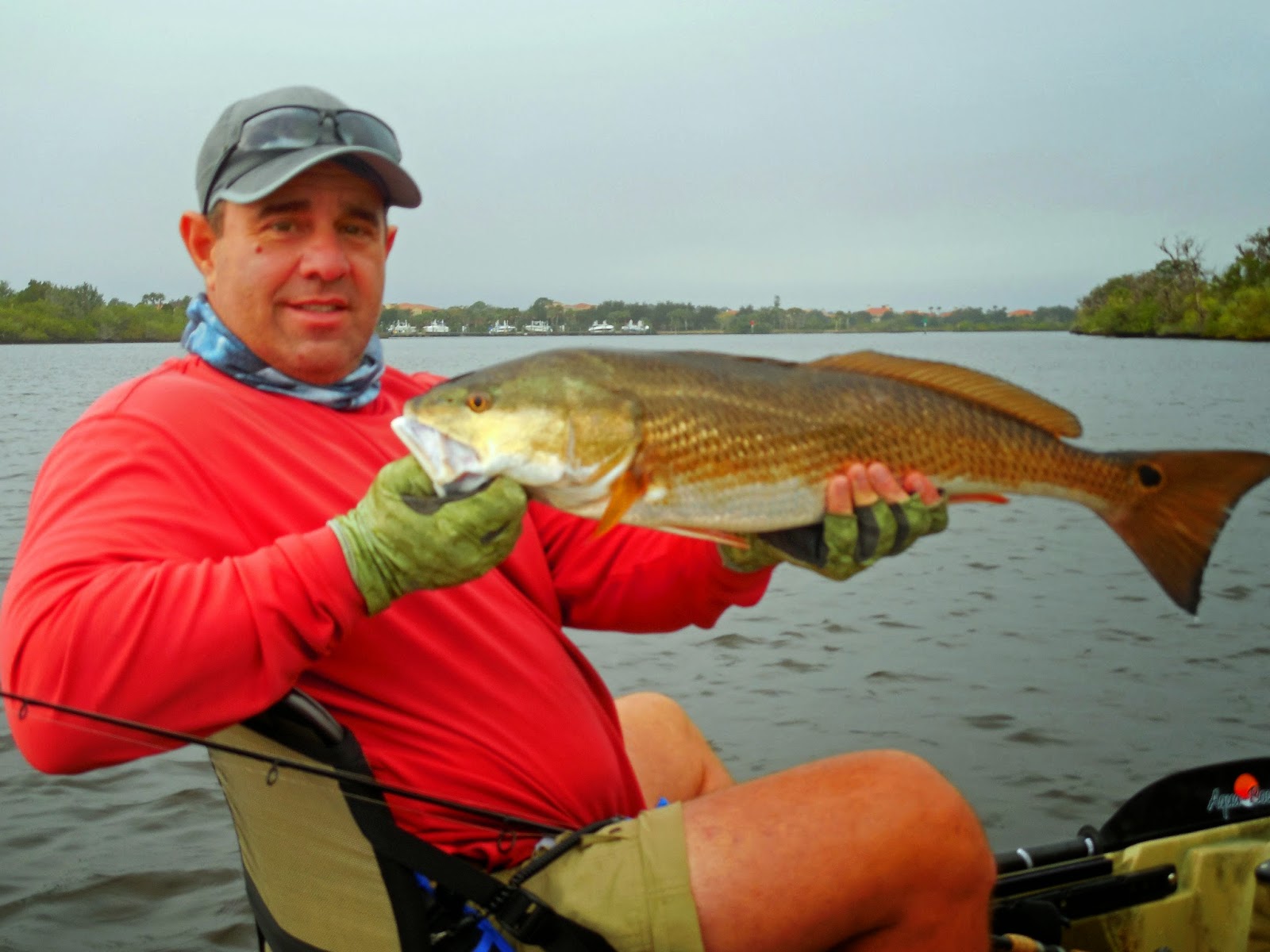
When we were able to get out, we did well on a variety of fish, including redfish, snook, spotted seatrout, Spanish mackerel, jack crevalle and ladyfish.

This feisty Mayan cichlid was taken on a Myakka Minnow.
Vinny Caruso of Bradenton joined me for an outing to Joe Bay off Southern Tampa Bay early in the month. Using topwater plugs at dawn, we caught several snook to 27 inches. Later in the day, we added snook, redfish to 26 inches and spotted seatrout to 18 on MirrOlure Lil Johns on light jig heads and MirrOlure MirrOdines.

We ventured down to Venice to fish a secluded spot off the Intracoastal Waterway on two occasions and totaled 27 snook, plus mangrove snapper, jack crevalle, spotted seatrout and a sennet (a small, barracuda-like fish). All of the fish were take on MirrOlure MirrOdines.

You might have noticed that I use the MirrOdine quite often. I estimate that I catch at least 80 percent of my saltwater fish on this versatile lure. As a result, most of my clients have turned to the MirrOdine as their "go-to" lure. I prefer the 14MR (mini) MirrOdine. I'm not sure color makes that much of a difference, but I mainly use the chartreuse or green back models.

The lure is easy to cast, easy to fish and easy to work. I cast it out and twitch it with my the tip of my rod. Sometimes I'll twitch twice, then once. I keep my rod parallel to the water. And since I'm right-handed, I hold the rod to my left.

I believe that working the MirrOdine slowly is key to its effectiveness. I basically use the reel to take in slack during the retrieve.

Joe Klenke of Kettering, Ohio joined my for an outing on Sarasota Bay near Buttonwood Harbor. We had to work for our fish, but ended up with 20 spotted seatrout to 19 inches and several jack crevalle and ladyfish.

Stephens Point along the eastside of Sarasota Bay has been productive. We've been getting snook around the docks at dawn on MirrOdines. In addition, we've caught redfish to 22 inches on topwater plugs. After the sun comes up, we move out to the deep grass when we have caught spotted seatrout to 25 inches, Spanish mackerel to 27 inches, ladyfish, jack crevalle and bluefish on MirrOdines, D.O.A. Shrimp and D.O.A. Deadly Combinations.

I joined Joe Mahler, Drei Stroman, Howard Beemer and Ted Schurdell for an outing around Golden Gate east of Naples. We had originally planned to fish The Everglades for exotics, but changed plans because of predicted strong wind. We did fair, landing a bunch of bluegill, Mayan cichlid and laremouth bass. The fish of the day was Joe Mahler's chunky peacock bass.

Vinny Caruso and I drove to The Everglades where we fish along Alligator Alley. We did pretty good before strong wind and a thunderstorm drove us off the water. We caught 35 oscar, 35 bass, 20 bluegill, 20 stumpknocker and five Mayan cichlid on my Myakka Minnow (copper color).

On the way home, we stopped at a recreation area on the north side of the road and did well casting Myakka Minnows from the dock. We caught another 15 oscar and several bluegill.
Everglades fishing should remain good through May until afternoon thunderstorms, heat and mosquitoes end the season.

Pete Walocko of Michigan fished with me once again. We fished off Stephens Point and had to work for our fish. The action was slow because the tide stopped moving for three hours! Once it got going, we caught spotted seatrout, ladyfish, flounder and silver trout. Pete landed a couple of trout in the 20-inch range on MirrOdines.

I hit the Braden River three times with mixed results. The first two outings resulted in 33 bass to 3 pounds, 40 bluegill and 20 stumpknocker on poppers and nymphs. The final trip of the week produced five bass to a pound and five bluegill on poppers and Myakka Minnows.

MAY FORECAST: We look for improved weather conditions, with light winds. If that happens, we expect good action on spotted seatrout, redfish and snook around Sarasota Bay. In addition, bass and bluegill action should pick up in local rivers and lakes.

Fly fishing for small tarpon should be good in The Everglades.

Beach snook action is expected to improve daily and the water temperature heats up and fish move out of the bays.


Steve Gibson
Southern Drawl Kayak Fishing
www.kayakfishingsarasota.com

941-284-3406


Sunday, April 6, 2014

Pompano top the list of good April action around Sarasota Bay

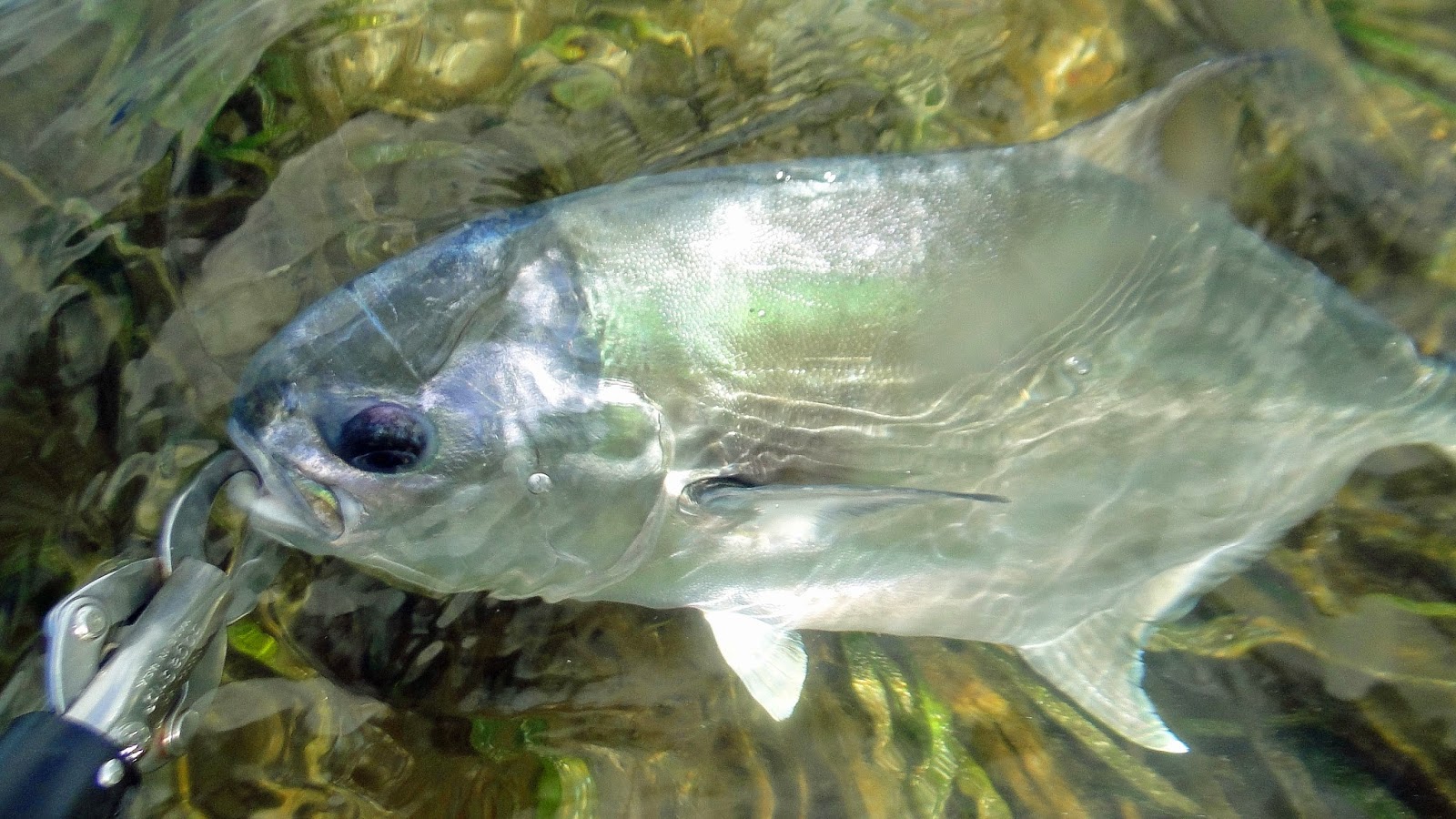
Pete Walocko of Michigan shows off a fine pompano he caught on a MirrOdine near Buttonwood Harbor.
Fishing was good for Southern Drawl Kayak clients during March. We caught a variety of fish in a variety of situations.

Once again, pompano topped the list. This year has been the best pompano action since 2009. We landed pompano on almost every trip.

Strange as it might seem, we caught most of our pompano on 14MR MirrOdines. Now, I'm told that pompano do not eat fish. They usually eat shrimp and other crustaceans. They might not eat fish, but they eat the heck out of MirrOdines, a lure that's supposed to resemble a scaled sardine (also known as whitebait or pilchard).

Why question it?

We also caught quite a few spotted seatrout during the month.

Redfish had a surge when they showed up on the shallow flats. We caught redfish on gold spoons, MirrOdines, MirrOlure Lil Johns on light jigs and topwater plugs (Zara Super Spook Jr.).

In addition, we caught jack crevalle, loads of ladyfish and a few snook.

Most of the action took place in and around Buttonwood Harbor off Sarasota Bay.

Pete Walocko and Richard Ives started things off early in the month. These two winter residents from Michigan had a fair day. They caught 25 spotted seatrout to 19 inches, three pompano, three Spanish mackerel, jack crevalle, sugar trout and ladyfish on MirrOdines.

Derek McNeil of Colorado did fairly well on fly rod. We caught 15 spotted seatrout to 22 inches, pompano, Spanish mackerel, sugar trout, ladyfish and jack crevalle. An olive-and-white Clouser Deep Minnow on a sinktip line did most of the damage.

Maureen Grose of Venice joined me for a shortened outing on a windy day. We cut the six-hour trip down to four hours because of heavy wind. Still, Maureen was able to land a fine pompano. We also caught spotted seatrout, ladyfish, mangrove snapper and a small snook on MirrOdines and Lil Johns.

John Kis of New York had a fair day. We landed spotted seatrout to 20 inches, pompano, Spanish mackerel and ladyfish on MirrOdines.

Ray Esboldt of Minnesota caught spotted seatrout, Spanish mackerel, sugar trout, jack crevalle and ladyfish on MirrOdines. Largest trout of the outing went 4 1/2 pounds.

Bill Suda and Pete Borg of New York booked a pair of trips. But we were only able to get one in because of thunderstorms. We fish Buttonwood Harbor and totaled 35 spotted seatrout, ladyfish, jack crevalle, sugar trout and pompano on MirrOdines.

Vinny Caruso of Bradenton joined me on a windy day. We had to fish Longboat Key canals to get out of the wind. But we managed snook, spotted seatrout, jack crevalle, ladyfish and croaker on MirrOlure Lil Johns. We also hooked a large snook that we couldn't keep out of the pilings.

On an outing to Joe Bay off southern Tampa Bay, Vinny Caruso of Bradenton and I combined to catch snook to 25 inches, redfish to 27 and a load of spotted seatrout to 16 on topwater plugs, MirrOdines and Lil Johns.

April forecast: I look for improved redfish action on the flats, with the best action taking place early and late on topwater plugs and spoons. Snook should make a good appearance in the backcountry and start to show up along the beaches. Also, spotted seatrout, jack crevalle and ladyfish should be plentiful.


Steve Gibson
Southern Drawl Kayak Fishing
www.kayakfishingsarasota.com

941-284-3406

Saturday, February 8, 2014

MirrOlures appeal to a variety of saltwater fish and are quite productive


The author used a Lil John on a 1/16-ounce jig to nab this hefty Myakka River snook.
We all have our favorite lures.

I have mine.

In fact, I could carry my arsenal of favorites in my shirt pocket.

Dave Robinson shows off his largest snook ever.
When I head for a saltwater fishing trip, I carry an assortment of MirrOlures: MirrOdines, Lil Johns and She Dogs.

That's about all I need.

I believe the MirrOdine just might be the best lure for big trout that I've ever used. In 2012, my clients and I landed 56 spotted seatrout of 5 pounds or more, including a large trout of 9 pounds. 

That might not raise eyebrows on Florida's east coast, but I consider it impressive here on the west coast.

Tarpon love Lil Johns, too!
I had a morning when the smallest trout I landed weighed 6 pounds.

I don't know what it is about the MirrOdine, but it certainly is a fish-producer.

I prefer the "mini" MirrOdines. I'm sure the smaller version was designed to be fished when the new batch of white bait shows up each year. But I've found the "mini" model works well year round. I've also taken my share of big trout on the regular model.

When I'm targeting big trout, I use a light Star spinning rod, Shimano Stradic Cl4 reel and 5-pound test PowerPro. I employ very little drag on the reel, preferring to use my fingers and palm to add drag as need. My reason for doing this is that trout have a "soft" mouth and the violent struggles of a large trout often are enough to rip the hooks right out of its mouth.
Vinny Caruso used a MirrOdine to nab this redfish.

So, I've found a soft rod, light line and light drag to be essential. It takes a soft, delicate touch when it comes to large trout.

One of the most important factors for me is to work the MirrOdine slowly. I hold my rod horizontally over the water to my left side (I'm right-handed). After casting, I retrieve any slack in the line, then twitch the lure with the rod tip. I repeat the procedure throughout the retrieve. I may vary the retrieve, twitching twice, then once.

Most of the strikes take place during the pause.

That's the beauty of a suspending lure. When you pause, it won't sink to the  bottom like a lead weight. It suspends tantalizingly in front of the fish.

This pompano ate a MirrOdine.
While the MirrOdine certainly appeals to large trout, I've found that pompano can't resist it, either. Over my last two trips, I taken 20 pompano from Sarasota Bay on MirrOdines.
In the past, I've always used jigs when targeting pompano. I don't think many people will argue with that logic. And I've got to admit that I wouldn't typically use a MirrOdine when it comes to pompano.

But my thinking has been altered. I think the MirrOdine is a great pompano lures.

And last summer, I landed two permit from Sarasota Bay on the MirrOdine.

Of course, other fish love them, too. I can't tell you how many redfish I've taken on MirrOdines. I've caught redfish on them while casting for trout. I've also taken many redfish by casting the lure into mullet schools on the grass flats. Redfish love to hang out around mullet. And they love the MirrOdine.

Snook absolutely go nuts over MirrOdines. I love to wade along the edge of a grass flat at low tide, casting parallel to the dropoff. That's where I hook a majority of snook.

And, of course, you'll catch bluefish, jack crevalle, Spanish mackerel and many other saltwater species on the MirrOdine.

If I'm targeting redfish on the flats, I like to rig with a 1/16-ounce jig head and Lil John.

I have to admit that when Eric Bachnik of MirrOlure sent me a pack of them a few years ago, I was suspect. Lil Johns are rather non-descript pieces of plastic. But they come in a variety of fish-catching colors and, most importantly, they catch lots of fish.

I usually use one of several colors: golden bream, watermelon with red glitter, watermelon with copper glitter and purple demon.

I've found that I can use that combo in even very shallow, grassy water. I take a majority of my redfish on the Lil John.

The Lil John also is great when it comes to prospecting for redfish in potholes.

Now when it comes to monster snook, the Lil John is money. I taken clients to local rivers in winter to pursue giant snook. Every rod has a Lil John and light jig head tied to it.

For river fishing, I love the watermelon with red glitter Lil John.

The trick for big snook is to target deep water and to allow the lure to get to the bottom. I try to bounce it slowly along the bottom.

We have taken snook up to 44 inches and many of more than 30 inches.

When targeting redfish and big snook, I use a medium-heavy Star Rod, Shimano Stradic 3000 Cl4 reel and 15-pound PowerPro. I use 30-pound fluorocarbon leader in the river for big snook. For redfish on the flats, I use 20-pound leader.

When the topwater bite is strong or when I'm "prospecting," I like the She Dog with the chartreuse back, chrome body and orange throat (CRGR).

When using any topwater lure of this sort, it's imperative to know how to "walk the dog" correctly. That's a retrieve in which the lure works side-to-side during the retrieve.

I like to hold my rod horizontally to my left side (I'm right-handed), and "twitch" my rod during the retrieve in a steady rhythm. It's much like patting your head and rubbing your stomach, but becomes second nature with practice.

As with any topwater lure, it's imperative not to set the hook on the strike. Just keep working the lure until you feel the weight on the fish. Then set the hook.

My association with MirrOlure goes back to the early 1970s when I was just starting out in the newspaper business. I heard shortly after I moved to Sarasota to begin work as the outdoors editor of the old Sarasota Journal that Harold LeMaster was the man when it came to tarpon along Florida's west coast. I mustered up some courage and called Harold at his plant in Largo. I was terrified.

But Harold was very nice and agreed to drive down and fish for tarpon with me.

It was one of several trips I made with him over the years. He even took me to Homosassa, the tarpon Mecca, long before the work got out about the great tarpon fishing there.

He wouldn't tell me where we were going. He just called it "Hog Heaven."

As with any lure, I don't use MirrOlures because I get them for free or at a reduced price. 

I use them because they produce fish for me consistently.


What more do you need?

Sunday, February 2, 2014

Fish cooperated in January -- despite wind and cold

Fly fisher John Garcia had a field day, catching spotted seatrout like the one he's holding.
January fishing was good when the weather allowed us to get out. Wind, rain and cold were the culprits.

When cold weather hits (it occasionally does in Florida), I like to head for Palma Sola Bay. Spotted seatrout there will drop into deeper channels and are usually in good numbers.

I fished there on an exploratory trip and did well. Using the new VuDu Shrimp from Egret Baits (www.egretbaits.com) is Many, La., I caught a load of spotted seatrout and flounder. You can read my review of VuDu Shrimp at http://gibbysfishingblog.blogspot.com/2014/01/vudu-shrimp-is-magical-on-variety-of.html

I took John Mallia and Jim Hoffman of New York to Palma and we had a blast. We totaled 60 spotted seatrout and a 20 flounder. We also managed a few ladyfish, sugar trout and a Spanish  mackerel. We used D.O.A. CAL Jigs with gold and copper crush paddle tails and VuDu Shrimp.

Speaking of Spanish mackerel  ...

We had good numbers of large Spanish mackerel in Sarasota Bay most of the month. I figured they would leave during the cold weather, but they didn't. Neither did the bluefish. Perhaps both species willl still around through spring?

John Mallia joined me for a trip on the Myakka River and we did so-so. We totaled four snook to 26 inches, a pair of spotted gar, a channel catfish and four ladyfish. We also jumped a small tarpon, but it threw the hook at the kayak. All fish were taken on MirrOlure Lil Johns on light jig heads.

Myakka River fishing has been down this year in comparison with past years. I'm not sure how the latest cold front affected the snook, but I'm hoping it pushed a bunch up the river. Snook are not very tolerant of cold water and will move into freshwater rivers and creeks in search of warmer water.

Fly fisher John Garcia of San Francisco and I fished Palma Sola Bay and did well. John caught a load of spotted seatrout and ladyfish on brown Clouser Deep Minnows. We also caught a few flounder and ladyfish.

Patrick O'Connor of Rotonda and I drove to the St. Johns River where we joined Dee Kaminski of Reel Kayak Charters out of Melbourne Beach for a day of shad fishing. American shad migrate up the river from the Atlantic Ocean annually to spawn. They usually show up in December, with the peak fishing being January and February.

Patrick and I had never caught a shad, so this was a "bucket-list" trip for both of us. We can cross shad off the list. On the day, we totaled 40 shad to 4.25 pounds, 10 speckled perch to 13 1/2 inches, a bluegill and a small bass. Patrick and Dee used small jigs on light spinning rods. I used a pink-and-white Kiptail Clouser on a 6-weight fly rod. I also used a chartreuse-and-pink shad fly on a 4-weight fly rod with a full-sinking line.

We fished in cold and rainy conditions, but it was worth it. When you're catching fish, you forget about the nasty weather.

February is booking up pretty well, with quite a few trips already arranged.

I anticipate good action on spotted seatrout, bluefish, Spanish mackerel, ladyfish, jack crevalle, flounder, redfish and ladyfish throughout Sarasota Bay. Snook action could be good at night around lighted docks.

In fresh water, I expect decent action on big bluegill, channel catfish, speckled perch and shellcracker on Lake Manatee, Manatee River and upper Myakka River.

Looking down the road, I expect the best redfish action in March and April.


Steve Gibson
Southern Drawl Kayak Fishing
www.kayakfishingsarasota.com
941-284-3406


Wednesday, January 22, 2014

Tackle whores are ready, willing and more than able

Sponsor decals are prominent on this kayak.
I am intrigued by the number of weekend anglers out there who are "sponsored" by companies who make rods, reels, lures, lines, leaders, kayaks and other merchandise.

My feeling is that many of those weekend anglers are duping these companies. However, I don't believe you can be duped unless you want to be duped.

I'll never forget a local fellow who worked in a local tackle shop and guided part=time. I mean really part-time. He did maybe two or three charters a month.

But he was sponsored.

He somehow convinced a nationally known outdoor writer to fly to Sarasota and fish with him during tarpon season. Even though the guide had a terrible reputation, the outdoor writer somehow managed to hook and land a tarpon.

After landing the fish, they decided a few photos were apropos. But before the camera was out of the bag, the guide removed the hook from the tarpon's mouth (they caught the fish on a live crab), cut it off and replaced it with a Rat-L-Trap.

Seems as if the guide was "sponsored" by Rat-L-Trap.

I'm on the water nearly every day. I don't have time to sit in front of the computer and email tackle companies, line manufacturers or lure makers to solicit sponsorship. When I get home after a day on the water, I've got kayaks and tackle to clean. Plus, I have to get ready for the next day's trip.

Meanwhile, Peter Pro Staff is sitting in front of a computer at his day job surfing the Internet and sending out email inquiries about sponsorships.

He misses more than he hits. But he does hit every once in a while.

Sooner or later, he's collected a stable of sponsors. He gets his kayak(s), rods, reels, line, lures and even apparel at a decent discount.

Meanwhile, some who work full-time on the water go without.

Here's a classic look at these "tackle whores:" http://www.youtube.com/watch?v=TzwF72B2F2w

What a "Pro Staffer" actually gets is a discount . Most companies don't expect much in return.

One company that I used to be affiliated initiated a "Pro Staff" program. That's cool, but the collection of Pro Staffers that it attracted was laughable. One of the new Pro Staff was a guy who works full-time for a living in retail and fishes maybe a half dozen times a year. Another new Pro Staffer just a started fishing out of their kayaks and applied to the program. He was accepted without question.

Another Florida angler who resides on Florida's east coast is a Pro Staffer for several companies. And that person always pay tribute to sponsors on Facebook at every opportunity.

"If it wasn't for my Big Fish Gloves, Lunker Line, Realto Rods, Supreme Reels, Fishy Kayak and Fred's Fishing Shirt, I couldn't have caught this redfish. Thanks!"

Are you kidding me?

But the sponsors get plenty of exposure on Facebook from the person. They don't get much exposure from that person on the water because he or she only does  a half dozen charters a year.

Yet that person has more sponsorships than most full-timers!

They're all the same. Their vehicles are covered with sponsor decals. Ditto for their kayaks. The only trouble is they usually don't fish all that much.


They're known as tackle whores. Only problem is, they take all they can get, but don't put out very much.

Tuesday, January 7, 2014

VuDu Shrimp is magical on a variety of fish species


This spotted seatrout inhaled a VuDu Shrimp on the first cast!
What I love most about the various social medias is that I get to see what folks in other regions are catching and what they're using.

When I saw fishing guru Jerry McBride's impressive catches on Facebook, I took note of a lure I hadn't seen before.

VuDu Shrimp are tough and come in many colors.
The lure looked very real and accounted for a variety of large fish.

I contacted McBride and asked what lure he was using.

"Vudu Shrimp," he replied.

I checked local tackle shops in Sarasota, Fla., where I run Southern Drawl Kayak Fishing (www.kayakfishingsarasota.com), but was unsuccessful in locating Vudu Shrimp. I figured I'd just have to order a few.

A week later,  I received a package of lures to review from Darryl Barrs, publisher of The Fisherman's Journal. Lucky me. There were two packs of VuDu Shrimp among the bounty.

Next trip out, I had a Vudu Shrimp tied on a light rig.

I'm not easily impressed. Nor am I eager to try things out of my realm of familiarity. But if Jerry McBride is impressed,  that's good enough for me.

I know it sounds too good to be true, but I really did catch a feisty spotted seatrout on my first cast! I was fishing four to six feet of water in Sarasota Bay off Stephens Point. On the day, I caught and released 50 seatrout, several ladyfish, a mackerel and two pompano  -- on one Vudu Shrimp.

Talk about durable!

Vudu Shrimp are made by Egret Baits (www.egretbaits.com) in Many, La. I'm sure the lures work well on Cajun redfish and trout. But catching finicky Florida fish is another matter.

The lures look very realistic and come in a variety of colors. My lures were VuDu Tiger and VuDu Natural.

Toothy fish are always a concern when fishing plastic lures. I've subsequently found that Vudu Shrimp are no match for bluefish and/or mackerel. Even the Kevlar weave through the plastic body can't prevent a blue or mackerel from cutting through your leader. But that's not the lure's fault.

What intrigued me was the lure's toughness. I caught nearly 60 fish the first time out, and my VuDu Shrimp was still in good enough shape to use again.

I tried a variety of retrieves. I cast it out and jigged it in. I worked it like a live shrimp. On occasion, I simply
reeled the shrimp in slowly.

All retrieves caught fish.

I'm going to put a Vudu Shrimp under a popping cork next time out and see what happens.

You'll want to fish a VuDu Shrimp on a light rod.  The lure is small and doesn't cast well on heavy line or gear. A light rod with 8-pound braided line is perfect.

I reported my experience to the folks at Egret and they weren't surprised.

"Glad the fish in Florida like out product," the company responded.

VuDu Shrimp come two to a pack and retail for $6.99.

Since that initial experience, I've used Vudu Shrimp in a variety of situations. And I've added redfish, snook and silver trout to my list of species caught on the shrimp.

And, oh, yeah, I forget to mention that Jerry McBride caught some lunker largemouth bass, monster bluegill and slab-sized speckled perch (crappie) on them.

Vudu Shrimp are versatile lures that hold up against constant pounding.


'Nuff said.