Thursday, March 10, 2011

Deep grass, canals and the flats are paying off for kayak anglers

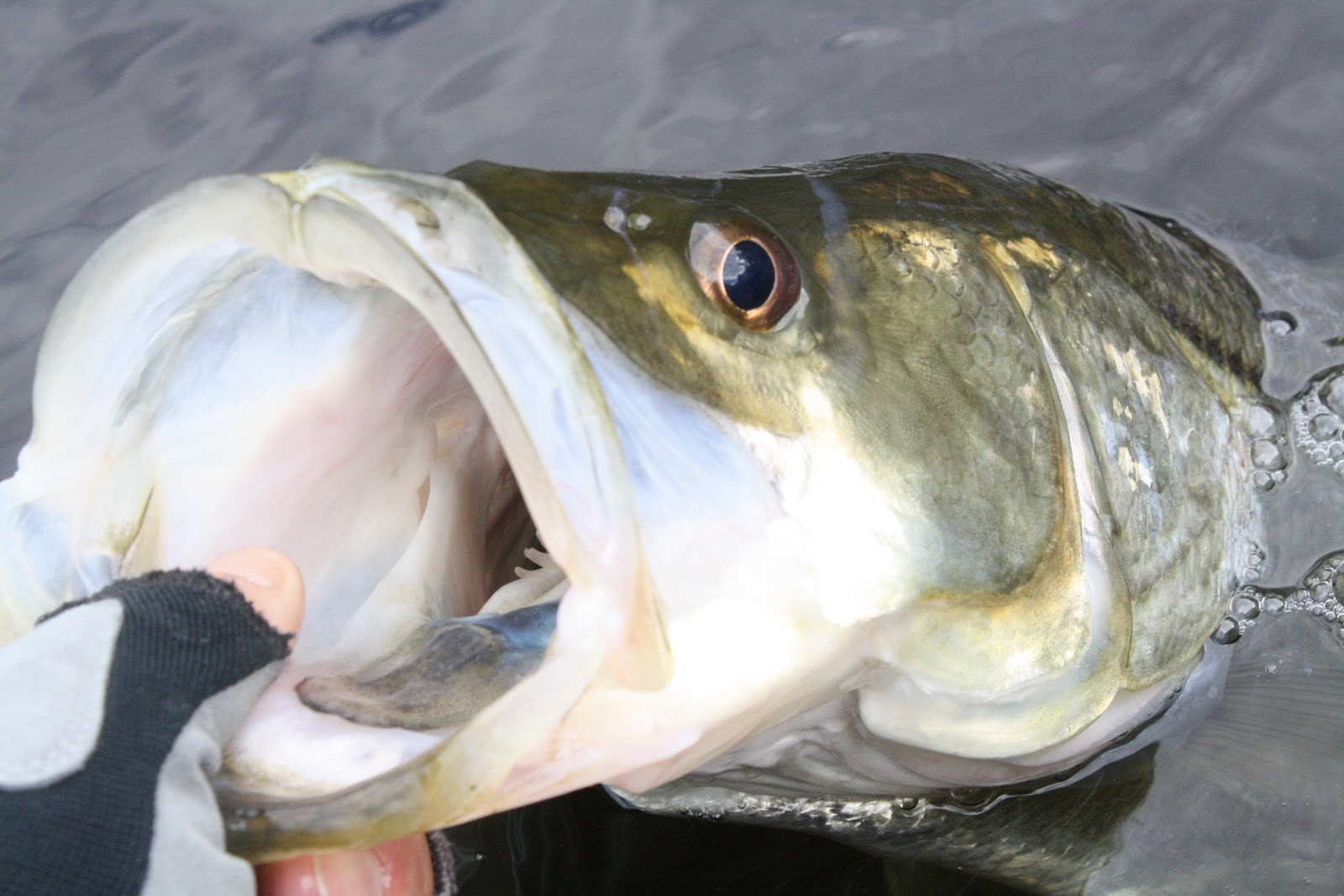
Bruce Butler shows off an oversized snook that was taken on a D.O.A. CAL Jig and gold paddle tail in Sarasota Bay.
I am amazed at the productivity of kayak fishing. That’s probably why I decided to devote myself to the sport years ago.


On average, we catch more fish while fishing from kayaks than we would if we were out in a powerboat.

The reason is simple: The fish do not know we’re there.

Of course, it’s all variable.

Over the past month, we’ve been doing fairly well in a number of situations. When the wind allows, we’ve been concentrating on the deep grass areas of Sarasota Bay off Stephens Point, Bishop Point and Whale Key.

On these trips, we’ve been getting lots of spotted seatrout to 19 inches, pompano to 2 pounds, bluefish to 2 and Spanish mackerel to 3. Most of the fish are being taken on D.O.A. CAL Jigs (1/16 and 1/8 ounce) and gold paddle tails.

Fly anglers have been using my Big Eye Baitfish fly and doing well on the same species, too.

Randy Honaker of Centerville, Ohio scored the biggest trout of his life on fly near Buttonwood Harbor. He also landed his largest ladyfish and first-ever flounder on fly. In all, Honaker caught and released at least 20 trout.

Chris Bentsen of Redmond, Wash., wanted to target redfish on fly – and he did. We didn’t encounter any large fish, but he did land a 16-incher on one of his spoon flies near Buttonwood Harbor. Bentsen probably could have caught a decent amount of spotted seatrout and ladyfish, but opted to concentrate on redfish.

Dave Sutton of Michigan joined me for a freshwater outing. He wanted to target big bluegill on fly rod. We selected the Manatee River and launched at Ray’s Canoe Outpost. The day wasn’t fast and furious, but it was steady. We caught 25 bluegill to 10 inches on poppers, nymphs and my Myakka Minnow. We also landed a couple of bass to 1 ½ pounds.

Wind has been problem. That’s to be expected. It’s March! However, determined anglers can still catch fish.

Fishing with Bruce Butler of Ozello, Fla., we caught and released snook to 32 inches, spotted seatrout to 19 and a number of small redfish on CAL Jigs and paddle tails.

Regular client John Garrity and his son joined me on a windy day along east Sarasota Bay. The wind wasn’t too bad when we started and wasn’t expected to kick up until early afternoon. We figured we could get out, fish and beat the wind. But it started blowing much earlier than predicted.

What to do?

We anchored on the lee side of an island along Bowles Creek. We fished the channel and landed spotted seatrout, sugar trout, silver trout, Spanish mackerel and flounder. The flounder was the largest I have seen in a quite a while.

All fish came on CAL Jigs.

There has been quite a bit of interest in my Everglades trips. Unfortunately, I have decided not to book any – at least for this year. Last year’s cold weather killed a majority of the exotics – oscar and Mayan cichlid. We could catch plenty of bass, bluegill, stumpknocker, shellcracker and speckled perch, but we can catch those species closer to home.

We might start doing Everglades trips in 2012.

Beach snook fishing is just around the corner. We start walking the beaches and sight-fishing the surf for snook in May. The season runs through August.

On most mornings, my clients will see at least 300 snook, with many going more than 20 pounds.

We use 6-, 7- and 8-weight fly rods, sinktip or full floating lines and 12-pound leaders with 25- to 30-pound shock tippets. Fly of choice is Gibby’s D.T. Variation, the only fly you’ll ever need in the surf.

This is classic sight-fishing at its best.

Last year was expected to be down because of the snook kill caused during the 2010 winter. But the numbers of snook along the beach weren’t down at all in the areas we fish.

If you’re interested in a beach snook outing, I’d suggest you book your trip early in order to get prime times. Cost is $200. I will take an extra angler for $35.

I supply all fly gear, but you’re certainly more than welcome to use your own.


Steve Gibson

Southern Drawl Kayak Fishing

www.kayakfishingsarasota.com

(941) 284-3406

Friday, February 25, 2011

Pattern changes as the weather heats up

Ken Taylor of North Port, Fla., is a happy angler after landing this fine Sarasota Bay pompano.

The pattern has changed – just as we suspected it would with the advent of warmer weather. We’ve left the deeper channels and other winter haunts and are now fishing the backcountry shallows and offshore grass areas.

As a result, we’ve been taking loads of spotted seatrout, plus Spanish mackerel, bluefish and pompano. That action should only heat up as we move toward spring.

This fishing can be fast and fun. When it’s going on, we often find hits on most every cast. And it doesn’t matter if you’re spin fishing or fly fishing.

When using spinning rods, we’re most often casting D.O.A. CAL jigs with gold paddle tails. We employ 20-pound fluorocarbon leaders – until the blues and macks show up. We’ll then go to heavier shock leaders.

Although a majority of the trout are 20 inches or less, there are some big girls out there. A friend of mine, Capt. Rick Grassett of the Snook Fin-Addict Guide Service, recently took a 6-pounder off the deep grass.

The bluefish often will top 5 pounds. Pompano will go better than 4 pounds. Most of the mackerel will range from 2 to 4 pounds. However, last spring, I took a 7 ½-pounder!

Randy Honaker of Centerville, Ohio joined me recently and caught a number of spotted seatrout. He also had shot at bluefish and Spanish mackerel, but didn’t connect. He had one fish that took line and made the fly line “rooster tail” through the water.

The next day, Russ DesErmia of Bradenton and his father, Bruce DesErmia of Traverse City, Mich., had a better day. They combined to land a bunch of spotted seatrout and Spanish mackerel. I think they also caught a couple of bluefish. All were taken on CAL Jigs.

Randy Honaker fished the west side of Sarasota Bay and was able to make a couple of casts to tailing redfish. He didn’t connect, but it makes your knees knock and your heart beat faster when you see those tails sticking out of the water.

Later that morning, we managed spotted seatrout to 21 inches, a redfish and several ladyfish. The highlight of my day was a squid that I took on a CAL Jig.

Ken Taylor of North Port fish the deep grass with me and did very well. We got into tailing reds early, but the fish didn’t tail very long. We caught jigs and topwater plugs in the shallows off Whale Key and landed four redfish and a trout. When we finally got out to the deep grass, we managed 45 trout, several ladyfish and a couple of fine pompano.

As the weather warms, snook will move out into the bay. When that happens, anglers fishing with me will get a shot at a snook or two just before daylight on either flies or jigs. That’s an added benefit!

In fresh water, we’re getting big bluegill and largemouth bass.

Beach snook season is just around the corner. The action will begin to heat up in May and run through August. This is “sight fishing” at its best. My anglers usually get shots at 300 or more snook of a morning, including fish of 20 pounds or more.

Please book your beach snook trips early. My schedule tends to fill up quickly.


Steve Gibson

Southern Drawl Kayak Fishing

www.kayakfishingsarasota.com

http://gibbysfishingblog.blogspot.com/

(941) 284-3406


Thursday, February 17, 2011

There are no sheephead in Sarasota Bay, but plenty of sheepshead


The fish at right is a sheephead. It is not found in Florida or Sarasota Bay.


The fish at right is a sheepshead. It's common throughout Florida's salt waters and is a popular fish in Sarasota Bay.


Sunday, February 6, 2011

Southern Drawl Kayak Fishing report

The D.O.A. 4-inch jerk worm on a CAL jig head has been producing some very good action on the Myakka River.
For the past two weeks, we’ve been fishing the Myakka River, a diverse and interesting stream that meanders through Sarasota County and empties into Charlotte Harbor.


We’ve been launching the kayaks at Snook Haven and fishing downstream, catching snook, redfish, largemouth bass and gar. We’ve taken “river slams” on most outings. A river slam is a snook, redfish and bass.

The D.O.A. 4-inch CAL jerk worm on a CAL 1/16-ounce jig head has been the ticket to success. We cast it out, let it sink to the bottom and then jig it slowly in.

The lure has resulted in snook to 29 inches, redfish to 23 and bass to 15. We’ve also landed gar to nearly 20 pounds.

The river offers exciting fishing and great scenery. There’s nothing quite like hitting the river and daylight and paddling downstream to our favorite fishing spots.

The banks are lines with cabbage palms, palmettos and stately oaks.

The allure of the river is you never know what you’ll catch. Most hits feel the same, but you might hook a 15-inch bass on one cast or a 20-pound snook on the next.

Capt. Jack Hartman of Sarasota fished with me in the upper river on a bass trip. We’ve combined to landed 40 bass to 2 ½ pounds. Most of the fish came on Culprit 7.5-inch red shad and crawdad worms. Bass were holding around fallen trees and drop-offs.

Dave Robinson of Sarasota caught a pair of snook to 24 inches and a bass on the D.O.A. jerk worm.

On a solo outing, I caught and released five snook to 25 inches, redfish to 23 and bass to 15. All fish came on the D.O.A. jerk worm.

On a recent outing, I discovered a new pattern for me. Usually, we target the shoreline, casting around fallen trees and other structure. I was doing exactly that one day when my wife called. While we were talking, my kayak started drifting toward the opposite shoreline. I made a cast into the middle of the river and immediately had a hit. I set the hook and was fast into a snook. I lost the fish – a 20-incher – at the boat.

On my next cast into the deep water, I hooked a fish that I couldn’t handle.

After our conversation ended, I decided to give the new “deep-water” pattern a try. It resulted in eight more fish – six snook to 27 inches an two nice bass. Over the next few trips, I caught more snook and bass, plus several nice redfish.

This river action should continue for at least another month.

I expect spotted seatrout, pompano, bluefish, Spanish mackerel and ladyfish action to pick up on the deep grass flats when the water temperature hits the mid-60s. It’s 62 right now, so that shouldn’t take long.

Redfish action on the flats is expected to improve – especially around the low tides.

If you like to cast a light fly for freshwater fish, the Manatee River is your place. There, we catch plenty of “hand-sized” bluegill, plus a few shellcracker, largemouth bass and channel catfish.

Please give me a call at (941) 284-3406 to book your outing.

The worst trip you’ll have will be pretty darn good!


Steve Gibson

Southern Drawl Kayak Fishing

http://gibbysfishingblog.blogspot.com/

(941) 284-3406

Wednesday, February 2, 2011

Myakka River pictorial


Enjoy!


Snook, redfish and bass slamming lures in the Myakka River


This 29-inch snook fell for a D.O.A. 4-inch jerk worm on a CAL Jig Head.

Fishing has been very interesting on the Myakka River. Most days, we’re able to take a river slam: snook, redfish and largemouth bass.

Not bad.

The beauty of the river is you never know what you’re going to catch. Could be a 2-pound largemouth bass on one cast and a 20-pound snook on the next.

Every cast could result in a monster fish.

Those fishing the river should realize that the fish don’t jump in the boat; you have to work for them. Key is keeping your lure or fly in the water. The more time you’re lure is in the water, the greater your chances of hooking up.

We’ve been launching at Snook Haven, 5000 East Venice Ave. It’s located about a mile west of Interstate 75 off River Road. The place is quaint. In addition, the restaurant there serves up some decent grub and they offer live entertainment on Thursdays and Sundays. You can also hop aboard a large pontoon boat to take a tour of the river.

We usually launch long before Snook Haven opens. We’ve been paddling downriver about a mile.

We’ve discovered a new pattern that has been paying dividends. I won’t divulge it here, but just say we’re taking snook, bass and redfish in areas you normally wouldn’t cast.

Today, I took Nick Walter, the former outdoors editor of the Bradenton Herald, out for a morning of fishing. Walter now is writing outdoors stuff for www.bradentonpatch.com.

I showed him my new pattern and it worked pretty well for the second day in a row. We caught quite a few bass to about 2 pounds. We also caught and released a small snook. The highlight of the outing was a monster snook that I hooked. It towed my kayak and made five jumps. The snook was so large it couldn’t get its body out of the water.

Walter figured the fish to be 39 or 40 inches. I estimated it at 30 to 32. It wore through the leader before I could land it.

Not to be dismayed. You can’t lose a big fish unless you first hook one.

Every day is different. On Tuesday, I landed four snook to 24 inches, four redfish to 22, four bass to 15. In addition, I hooked and lost a couple of big gar.

I landed a 29-inch snook on Monday and two smaller fish. In addition, I caught and released three redfish and several bass.

I’m taking most of my fish on a D.O.A. avocado flake 4-inch jerk worm on a 1/8-ounce CAL Jig Head. The key is to slowly hop it across the bottom.

In addition to fish, we’ve been seeing a few alligators, raccoons, otters, osprey, great blue heron and night heron.

The Myakka River is my favorite place to fish this time of year. It’s a great place to fish for snook, and there’s always the chance you’ll hook a monster.

Even if you don’t land a fish (that won’t happen), you’ll have a wonderful time. The river, which has been declared a scenic body of water, is one of the most picturesque streams in the state – if not country.

I expect fishing to remain steady until we get two weeks or so of warm weather.

Until them, you can find me on the Myakka River.

Sunday, January 30, 2011

Once plentiful jack crevalle are now in short supply


Kayak angler Walter Hamm of Sarasota, Fla., admires a jack crevalle

Jack crevalle used to be a constant on every fishing trip.

You might not catch snook, redfish or spotted seatrout, but you could always count on jack crevalle.

They’re a rare catch these days.

I remember looking out over Sarasota Bay several years ago and seeing several schools of jack crevalle attacking baitfish. They seemingly were everywhere.

Talk about a fish made for fly rod …

Jacks will hit a variety of flies. They’ll put up a great battle, no matter what size rod you’re using.

I remember a trip I made in March of 2006. I had an angler from Marietta, Ga., and the fishing wasn’t so hot. The wind was up and it was tough to fish. We caught a few ladyfish in the perimeter canal of Longboat Key. Late in the morning, the wind let up a little and we were able to get out into Sarasota Bay.

We anchored the kayaks, got out and waded. Wasn’t long before I saw a large wake heading our way. I looked around and didn’t see any boats, so I knew it was probably fish. But it was such a large wake that I had no clue what it was.

When the wake got to within casting range, I instructed m client to cast. He did. And so did I.

I hooked up immediately and knew I was into a really big fish. I could see the fish in the school and they were all jacks of 25 pounds or more. I handed the rod to my client and watched as he tried to fight the fish.

The big jack made a long run, and I wasn’t sure my client would be able to stop the fish. He finally did, but I knew he was in for a long battle.

Forty five minutes later, he had the big fish within 50 feet. But that’s when the line went limp. I figured the big jack had broken the line, but I was wrong. The hook on the jig had straightened.

I waded back to the kayak and grabbed another rod. This was a heavier rod with a topwater plug tied on.

I didn’t think the jacks would return. However, I looked down the bay and saw the wake again approaching. I pointed it out to my client and we were ready when it neared. We both cast into the school. Again, I hooked up.

I handed the rod to my guy and watched as the big jack took the line. I don’t think that fish even knew it was hooked. There was little we could do as we watched the line peel off the reel. We were too far from the kayaks. I told him to put all the pressure he could on the fish, but it was useless. Just before he lost all of the line, I instructed him to grab the spool, point the rod at the fish and hold on.

The line broke at the leader. We lost the plug, but saved 300 yards of line.

My client didn’t land either jack, but he was a happy camper. He’d never battled fish so large.

I don’t know if that will ever happen again?

I’m not sure why there are so few jacks around, but I’ve been told the commercial fishing industry is doing a number on them. The commercial guys have created some sort of market for them and apparently are wiping them off the face of the earth.

Jacks aren’t considered good to eat by most folks, so they’ll get not protection. The Coastal Conservation Association won’t go to bat for jacks. Nor will any other organization.

And that’s too bad. Jack crevalle are part of the chain. They’re also great fish to catch and release.

My clients didn’t catch a half dozen jacks last year.

I’m afraid we’ve lost them. I’m hoping it’s just a down cycle, but I’m probably wrong.

Let me know what you think? Are you catching lots of jacks? Is there a shortage in your area?

If you’re not catching them or seeing them like you used to, then start talking to your fishing buddies about it.

We need jacks. We can’t let them be netted to obliteration.